

New Jersey Language Disorder Therapy
Improve your ability to communicate and find the words you need to express yourself effectively with dedicated, experienced New Jersey language disorder therapy at Neurorehab & Speech Healers, LLC!

Language disorder therapists provide support and assistance to those struggling with disorders such as aphasia, dysarthria, or apraxia. These disorders can impact your ability to speak or recall words, cause stuttering or slurred speech, impact your ability to read and write, make it hard for you to understand the context or complexity of language, and can create other communication barriers.
An inability to effectively communicate at any age makes getting your needs met, and having satisfying and rewarding relationships with family and peers challenging. When you are able to develop tools to improve these abilities, work, school, relationships, and day to day activities become not only more comfortable but also more enjoyable.
At Neurorehab & Speech Healers, LLC, our New Jersey language disorder therapists provide the personalized language support you need to improve your speaking skills, build your confidence, and effectively communicate your needs, thoughts, and unique perspectives.
Safe teletherapy and online therapy options are available. Call Neurorehab & Speech Healers, LLC at (732) 783-5539 for a Free Consultation!
Who Benefits From Language Disorder Therapy?
 Identifying when you or a loved one can benefit from the support of a speech-language therapist can be difficult. While some problems are immediately evident after an event, injury, or accident, not all language issues occur the same way. Cognition problems can sometimes be progressive, leaving you less capable of properly forming and understanding language, and more confused and frustrated as your abilities degrade.
The earlier you are able to identify that speech or language disorders may exist, the sooner you can begin treatment and begin to rebuild or regain your skills. A qualified, certified language disorder therapist can provide specialized assessment, diagnosis, and treatment, so you can get both the answers and support you need to slow or reverse the impacts of your condition.
If you or a loved one are suffering from any of the following, seek the assistance of a skilled speech therapist for support.
- Trouble controlling the volume, tone, or pitch of your voice
- Trouble selecting appropriate words
- Commonly mislabeling everyday objects
- Forgetting names of friends or family
- Slurred speech, stuttering, or inability to form the sounds of words
- Struggling to recall current events or your personal history
- Challenges with comprehension
- Having trouble following directions and with orientation
- Struggling with problem-solving, time, or money
- Responses in conversations that are delayed or inappropriate
- It’s difficult to chew or swallow during meals
- Struggling with coughing, spilling, and gurgling when trying to eat or drink
Language disorder therapy improves your language skills as well as your confidence in your ability to communicate effectively. If you, a child, or parent is experiencing issues with language formation or comprehension, then our New Jersey language disorder therapists provide effective treatment and support.
3 Convenient Language Therapy Options
As your New Jersey language disorder therapy clinic, we are dedicated to making speech therapy accessible to everyone! Many of our speech clients also struggle with reduced mobility, making office visits challenging, or suppressed immune systems, which can make in-person visits unsafe. By providing three options for administering speech therapy, we make sure everyone has access to the speech and language treatment they need.

Outpatient speech therapy is provided in our local speech and language therapy office, allowing us full access to our full selection of speech tools and language therapy instruments. This allows us to easily cater to your unique needs or adjust our techniques immediately if a particular approach doesn’t have the intended effect.
Home speech therapy is performed in your home by one of our certified speech-language therapists. While some choose this option due to limited mobility, others simply feel more confident working in their own home. We want to make sure all of our speech therapy patients are as comfortable as possible during their session.
Virtual speech therapy is an increasingly popular option, allowing us to assist any patient at any time through digital chat, regardless of their current location. We will supply or help you acquire all of the materials needed for completing your speech teletherapy training session.
We can also provide a combination of therapy settings, and you can choose a different method at any time. Some clients may find that teletherapy is a better choice for them as their therapy progresses, while others may choose this option from the beginning, or never at all. We are dedicated to making language therapy convenient and comfortable for you, and offering a variety of convenient speech treatment options is just one of the many ways we do that.
Experienced Language Disorder Pathologist
Founder of Neurorehab & Speech Healers, LLC, Robert Kevlin, M.S., CCC-SLP, LSVT LOUD® CERTIFIED, has dedicated his life and career to language, speech, and the vocal arts.
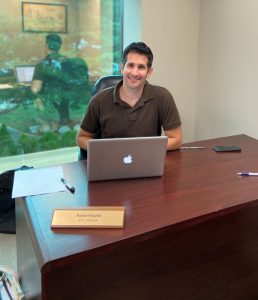
An award-winning, experienced, qualified, and trusted speech-language pathologist with over 10 years of experience with assisting people of all ages with speech disorders, Robert is also an accomplished vocal artist. A talented performer, he has graced the stage, screen, and airwaves to share his impressive vocal talents.
At the base of all of these accomplishments is a love and true understanding of language and vocal ability. He has not only worked with the top experts in the field of speech pathology to gain the trust, admiration, and respect of his peers; he has had training from top vocal experts from around the world. This complete grasp of not only how language works mechanically, but how it can be manipulated and improved, provides him with unique insight and experience that has ultimately led to his success in both areas of his life.
If you are looking for a New Jersey language disorder therapy center that can provide insight, assistance, and a deep passion for vocality, Neurorehab & Speech Healers, LLC is the right choice for you.
Let’s Get Started- Free Consultation
Get the dedicated support you need to overcome your language barriers, limitations, or impairments. As your dedicated New Jersey language disorder therapy specialists, Neurorehab & Speech Healers, LLC provides complete support and assistance for those struggling with speech disorders of all types and causes. With outpatient therapy, home therapy, or virtual speech therapy, we make it easy for you to get the care that you need.

If you, a parent, or your child is struggling to find the right words or properly form words, has issues with language comprehension, finds it challenging to control the pitch or volume of speech, stutters, has memory or concentration problems, or issues with properly swallowing, we can help. Reach out to one of our dedicated speech-language therapists for evaluation, testing, diagnosis, and the customized treatment you deserve.
Call Neurorehab & Speech Healers, LLC at (732) 783-5539 for a Free Consultation!
